
Tuesday, November 29, 2011
The PEN / O. Henry Prize Stories 2011

Wednesday, June 22, 2011
People of the Book by Geraldine Brooks

Saturday, June 04, 2011
Decision Points by George W. Bush

Wednesday, March 16, 2011
Deal Breaker by Harlan Coben

Monday, February 21, 2011
Anne Frank: The book, the life, the afterlife by Francine Prose

Tuesday, February 01, 2011
At Canaan's Edge by Taylor Branch

Saturday, October 23, 2010
The Story of Edgar Sawtelle (1/3 through)

Monday, August 09, 2010
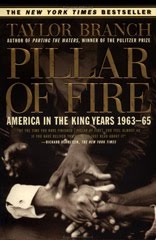
Pillar of Fire (all the way through)

Wednesday, August 04, 2010
Pillar of Fire (halfway through)
Sunday, July 18, 2010
The Italian Secretary

The most disappointing aspect of the book, though, were the clues that Mr. Holmes followed in deciphering the crime -- most of the clues dropped in the book turn out to be red herrings, and the ones that ultimately solve the case are not necessarily obvious, but not so subtle that they would require Mr. Holmes to use his highest powers of observation and experimentation. Also, there are some loose strings at the end that are not tied up, and Holmes and Watson are not involved in the final capture of the murderer in the direct way that I would expect.
Sunday, July 11, 2010
Getting Organized in the Google Era

Monday, May 03, 2010
Paul Celan: Poet, Survivor, Jew
I re-read this long, intense study of an important German-Jewish poet over the last two to three weeks in honor of the professor who wrote it (John Felstiner), who is retiring this month from teaching at Stanford. This professor was the closest thing I had to a mentor at Stanford, but I really only knew him from taking two classes that he taught. He taught on poetry in a way that invited students to read poems closely, and his poetry selections were interesting and varied. He also taught a course entitled "Imagining the Holocaust" that attempted to put the Holocaust in context with the works of survivors as the centerpiece. That is where I first was introduced to Paul Celan's poetry, specifically "Todesfuge," or "Death-Fugue," which imagines the Holocaust very specifically in a German poem. The professor played a recording of the poem, which he reads closely in the book, and I remember being impacted by the reading. The poet was not very loud or overly dramatic, but the poem itself has a definite rhythm that adds an emotional charge. The book re-creates that charge, interestingly, by translating the poem into English, but working the original German words back into the poem -- the repetition of words in the poem allows this, and the "regression" so to speak back into German identifies the specific nature of the poem. The poem is about the death caused by Germans, so it is fitting that it should end with German language, even in translation. This kind of innovative yet true translation is at the heart of this book, which tackles Celan's life through his poetry. The book makes the poems come to life for those of us who don't know as much German as we would need to translate Celan's poetry. Celan's poetry is difficult because it is quite often very spare -- it uses so few words as to be mystifying. Yet still, the poetry speaks to the condition of the German language after the Holocaust, and attempts to bring the truth of the man-made disaster into the language without diluting its horror or softening its impact. The poet spoke in one of his speeches of the difficulty of writing poetry in German after "the thousand darknesses of death-bringing speech." This book clearly examines Celan's poetry to illuminate the process the poet went through in trying to accomplish this project.
Monday, March 15, 2010
Fearless by Max Lucado

I read this book with relatively high expectations. I hoped to find answers to some of my problems with fear -- the fact that fear drives me to a certain extent, and that I feel constrained by fear, especially when it comes to money. The promise of the book is that it will teach us how to live a life without fear, and it delivers on that promise to a certain extent. However, it falls short of being a life-changing treatise that alters my worldview completely. The book does address specific causes of fear, including money, and the answer is always to turn to Jesus in some way. The simple Biblical truth that this book addresses is that every fear (except the fear of God, which is another word for faith) can be lessened if we look to Jesus, the Holy Spirit, and God the Father for answers. That truth is expressed gracefully, with style, and with compassion. Still, I am hungering for more truth on the nature of fear. Why does God allow us to be so ruled by fear? The author does touch on the fact that fear sometimes plays a useful role in warning us of dangers. But he doesn't delve deep into the psychology of fear, how rooted it is in our experience. In a way, fear is the only appropriate response to the human condition. Still, I wonder if that's purposeful -- that the author knows not to dwell too much on the deep-rootedness of fear, because his philosophy and advice is simple -- trust God, no matter what.
Tuesday, March 02, 2010
American Rust by Philipp Meyer

American Rust starts with a killing that could be called self-defense. The plot flows forward from this single event and remains taut until the final conclusions are reached. The point of view bounces back and forth in stream-of-consciousness style from the two main characters, 20-year-old Isaac and 21-year-old Poe, to their family members and the police captain, Bud Harris, who is charged with cracking their case. Isaac, a smallish, smart kid whose mother has committed suicide before the novel opens, lives with his wheelchair-bound father in southwestern Pennsylvania. His sister, who escaped to Yale shortly after her mother's suicide, also makes an appearance about a quarter of the way through the novel. The father's and the sister's perspectives don't add that much to the novel, but they are important in telling the story. Poe, a former star athlete, lives with his mother, Grace, who also becomes a focus of the narration. She becomes the wheel around which Bud Harris turns (they have an on-again, off-again relationship at the beginning of the novel). She ultimately shifts his actions toward the unthinkable. The setting dominates the novel -- the broken-down steel mills being reclaimed by nature, the beauty of the hills around the fictional town of Buell -- as every character takes note of the setting at various points in the novel. There are heavy overtones of American decline -- hence the title. The book creates many murky moral dilemmas and contains difficult, life-affirming or life-denying choices. It earns the category of serious literature because it doesn't shy away from these painful realities. The content of the novel is a little like John Updike's -- lots of sex, well-drawn characters who make bad decisions -- but without the comic turns. The novel opens with quotes from two existentialist authors (Kierkegaard and Camus), so there is a little too much existential angst in the novel. Still, the author does write a gripping tale, and I have to give him his due in drawing me in to a story that gave me plenty to chew on.
Wednesday, January 27, 2010
The Alchemyst by Michael Scott

Saturday, January 09, 2010
The Magician's Elephant

Monday, October 19, 2009
Parting the Waters: America in the King Years 1954-1963

Reading this book affected my view of the civil rights struggle profoundly. First, it introduced me to the spirit of the non-violent movement, which was not orderly at all but somewhat chaotic and full of internal debates and rivalries. Then, it shocked me with the level of violence perpetrated against those who were demonstrating for rights I had taken for granted. The description of segregationist mobs who attacked the Freedom Riders, in particular, and out-and-out violence and intimidation against civil rights protesters in general made me think twice about my perception of an empathetic response to the civil rights movement. Many white Southerners were blinded by hatred and bigotry to the extent that they would justify atrocities to defend segregation; there was precious little empathy in the response to the protests. Finally, the book opened up the federal government's response, including anti-Communist paranoia at the FBI under J. Edgar Hoover and quite a bit of foot-dragging on the part of the Kennedys in responding to the civil rights movement's activities. The march on Washington, which established Martin Luther King as a national leader capable of swaying the nation, also resulted in very little specific progress on the civil rights bill, in part due to the Kennedys' dependence on Southern Democrats who were also segregationists. The chapter after the march on Washington is entitled "Dreams and Nightmares" and puts the "I Have a Dream" speech in context with the Birmingham church bombing that followed close on its heels. The story as a whole is gripping and intense, and despite the huge cast of characters (history isn't as simple as a novel), it provides a powerful insight into how this change in American life came to be.
Saturday, August 29, 2009
Three Books I Haven't Quite Finished
I started two books this summer and attempted to get through more of a third:
 Personal History, by Katherine Graham, publisher of the Washington Post during the Watergate years and wife to a manic-depressive husband. As soon as I learned her husband was manic-depressive, I stopped reading the book. I guess I didn't want to know more about her husband's suicide and her "failures" to get to the bottom of his issues. The book was interesting enough, but it has a real sense of entitlement throughout. Ms. Graham really does believe the Post is the best newspaper in the world and that she was instrumental to that development, apparently. I didn't finish the book, but she was enormously proud of a business deal early on that I felt was more important to her than to the quality of the paper -- a merger, of all things, between two different Washington papers that gave the Post a dominant position in the "morning" slot. That may have been key to the Post's success, but it seems so prosaic compared to the romantic view I have of newspapers as guardians of the public trust, not as businesses. So this book opened my eyes to the business side of things, but it's not something I really wanted to have happen.
Next up was Ulysses, which I continued reading for a little bit before putting down again. I read up through a lengthy discussion of Shakespeare and some avant-garde interpretations that are more or less accepted as fact by the general public nowadays -- that Shakespeare was gay, that he was a Catholic, that he was a woman-hater. I do think Shakespeare was Catholic, but the "gay" concept is ahistorical, and the woman-hater charge is pure bollocks. Anyway, the lengthy discussion kind of wore me out as a reader, but I may try to get back into the swing of this novel again later.
 Finally, there is Parting the Waters, a brick-sized volume on "America in the King Years" that is riveting in parts and mind-numbingly complex in others. The factual description of the violence perpetrated against the early Freedom Riders in particular is stunning. The book describes the chaos and confusion of the early King years, and I'm looking forward to the triumphant March on Washington. The complexity of the story, though, is threatening to overwhelm me as a reader. Maybe I'll take a page from Monty Python and "skip a bit."
 Personal History, by Katherine Graham, publisher of the Washington Post during the Watergate years and wife to a manic-depressive husband. As soon as I learned her husband was manic-depressive, I stopped reading the book. I guess I didn't want to know more about her husband's suicide and her "failures" to get to the bottom of his issues. The book was interesting enough, but it has a real sense of entitlement throughout. Ms. Graham really does believe the Post is the best newspaper in the world and that she was instrumental to that development, apparently. I didn't finish the book, but she was enormously proud of a business deal early on that I felt was more important to her than to the quality of the paper -- a merger, of all things, between two different Washington papers that gave the Post a dominant position in the "morning" slot. That may have been key to the Post's success, but it seems so prosaic compared to the romantic view I have of newspapers as guardians of the public trust, not as businesses. So this book opened my eyes to the business side of things, but it's not something I really wanted to have happen.
Next up was Ulysses, which I continued reading for a little bit before putting down again. I read up through a lengthy discussion of Shakespeare and some avant-garde interpretations that are more or less accepted as fact by the general public nowadays -- that Shakespeare was gay, that he was a Catholic, that he was a woman-hater. I do think Shakespeare was Catholic, but the "gay" concept is ahistorical, and the woman-hater charge is pure bollocks. Anyway, the lengthy discussion kind of wore me out as a reader, but I may try to get back into the swing of this novel again later.
 Finally, there is Parting the Waters, a brick-sized volume on "America in the King Years" that is riveting in parts and mind-numbingly complex in others. The factual description of the violence perpetrated against the early Freedom Riders in particular is stunning. The book describes the chaos and confusion of the early King years, and I'm looking forward to the triumphant March on Washington. The complexity of the story, though, is threatening to overwhelm me as a reader. Maybe I'll take a page from Monty Python and "skip a bit."
Monday, March 16, 2009
Wicked by Gregory Maguire
 This book got really long about half way through. It didn't make a lot of sense to me until the end, when it all starts to come together. It's a reimagining of the Wizard of Oz, telling the life story of the wicked witch. The plot really drags in the fourth part, when the witch holes herself up in response to a devastating blow. This is definitely an adult-oriented story, with a few sex scenes, starting from the beginning. The very beginning is pretty catchy, and the scenes of the education Elphaba (the witch) receives at the school in Shiz are an enjoyable, much more sinister take on Harry Potter. This book gets a little lost in its own mythology, though, and the "serious" discussion of evil conducted in dialogue toward the end of the book seems a little laughable. If the book is concerned with the nature of evil, it ought to be expressed more in the plot of the story than in this one piece of dialogue. Throughout, the book is more political about evil than it is moral or philosophical. That can be a good thing, but in this case it is kind of a drag. The witch is sympathetic, but she doesn't really rise to the level of tragic hero or even anti-hero. The mistakes she makes at the end are tragicomic, though, I guess. The end almost makes up for the fourth part of the book, but I wish the author could have made more of Dorothy.
Wednesday, October 15, 2008
The Club Dumas
 I found this mystery intriguing enough from the beginning to read it quickly through to the end. The novel describes the world of rare book dealing as a cutthroat enterprise, peopled by misfits who end up going to extraordinary lengths in pursuit of certain antique books. The novel centers around Lucas Corso, who is a kind of bookworm-for-hire, willing to do just about anything to acquire the books his employers seek. In this novel, he researches a manuscript possibly penned by Alexandre Dumas, author of the Three Musketeers, for a friend. At the same time, he delves into a paid job researching an extremely rare -- only 3 copies are known -- book from the 1600s that got the publisher burned at the stake because it supposedly contained instructions on how to call forth the devil. Corso increasingly comes to feel that he is playing a role in a novel himself, as events transpire that mirror events in the Three Musketeers. This "metanarrative" is pretty distracting and seems like an obvious ploy by the author to get into the good graces of critics and academics. The mystery from the 1600s is more intriguing and seems nearly genuine. However, I don't really recommend this book because the ending is quite far-fetched, and the resolution of the mystery around both books is disappointing. Also, the female character that follows Corso around for half of the novel and with whom he develops a relationship is too much of a plot device and not enough of a character. For all its intricacy and careful plotting, this book just doesn't deliver in the end.
Subscribe to:
Posts (Atom)